Soldiers who stopped a war
The U.S. war on Vietnam left an indelible mark on those who took part in it and sparked an antiwar movement more popular and passionate than any in U.S. history. But the part played by U.S. soldiers--active-duty GIs rebelling while in Vietnam, and antiwar veterans protesting back home--is often neglected.
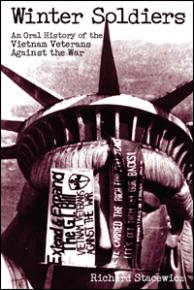
Winter Soldiers: An Oral History of the Vietnam Veterans Against the War recovers this moving chapter in the history of the Vietnam War era. Oral historian brings together the voices of more than 30 VVAW members who spoke their conscience and helped end the war in Vietnam.
In this excerpt from a new edition published by Haymarket Books, Stacewicz presents the story of two members who were active in Ohio, Pete Zastrow and Bill Davis.
This fall, Stacewicz will join other authors on the Resisting Empire speaking tour.
Pete Zastrow went through the ROTC program at Dartmouth College and got several deferments until he left graduate school. By the time he went into the armed forces, as an officer with a desk job, he was already convinced that the war was wrong. But despite his antiwar convictions, he decided to yield to pressure from his superiors to "experience Vietnam." He served a year in Vietnam, from December 1968 to December 1969, when he was discharged. He was interviewed at home in Chicago.
Pete Zastrow (PZ): When I went home, I guess the chapter of VVAW in Cincinnati, which at that point was just getting started, must have gotten my name that I had joined. They phoned me and told me they were having a meeting in a church basement. They were planning a march at that point to a military supply facility in Indiana. So I went to the meeting and listened.
How would you describe the political line, or the political approach, of the Cincinnati chapter?
PZ: Naively antiwar and, among more conscious elements, consciously anti-imperialist--without hardly being able to define it. We couldn't quote Lenin on what imperialism was. Some of us could, but most of us couldn't. I think we had a sense of history because we very much saw ourselves as patriots, to be able to go back and point out where the United States had done this time and time again--and as Vietnam veterans, saying, "Look, we're atoning for something our government did there and which we did again in Vietnam."
We had a pretty rousing chapter in Cincinnati; we were all over the place. We would do things constantly. The meetings, which were held weekly, were attended by about 25 people, which was a very good size, because we could draw on a lot more than that. We got involved with the whole antiwar peace movement in the city.
One of the first things I ever did was: They asked me to be the representative for this organization called the Cincinnati Peace Coalition. I became chairman of that coalition. The Peace Coalition actually turned into kind of the heads of all of the major antiwar groups in the city. It became influential in being able to turn out fairly large numbers of people.
Did people have any anger toward you as a veteran?
PZ: No. It was something quite different: "We were so glad to have you on side, because you could tell us the truth, or you could tell other people the truth. What a wonderful thing that is, that you're going to come to our meetings," and so forth.
It was a remarkable experience for me. It made you feel very good. Respect was part of it, but it was more than that. It was kind of feeling that you got from other people because here you are representing that organization [VVAW].
I remember feeling the same way the first time I gave one of these big outdoor public speeches--it was an antiwar rally, and it would have been a relatively early one--getting up there and speaking to all these people as a Vietnam vet, because VVAW had not been in Cincinnati, basically, before then. All these people were so excited. They loved it. The response was just so great. I'm sure it didn't come from anything I said, but because of what I was representing. Boy, was that ever a shot of adrenaline. That kind of thing inspires one. That's pretty good impetus to keep doing it.
We had an [irrefutable] sort of position, which says something about truth. It was hard to beat the credibility of all these veterans; it's so much the key to where VVAW comes from. People could never beat that back, and even in those cases where we would be put on a program with an ROTC recruiter, who had also been to Vietnam, they could not say, "Oh, yes, the Vietnamese really like to have us here and we're fighting in the name of truth or justice." They couldn't. We were good enough at debating to score point after point after point. So after a while they just stopped coming, and we ended up always talking by ourselves.
Besides that, we did all kinds of things. We did things like go to the veterans' hospital and take people in wheelchairs to a baseball game--that sort of thing. We organized and demonstrated, mostly around the war.
We were telling them about the war. That's what we knew about. That's what we could talk to people about.
Was it a moral commitment that kept you going, or was it a political commitment?
PZ: I don't think you could disconnect those. It was a social commitment, too. We did become friends. We partied together. We did pretty near everything together.
We grew. We made money. We bought a huge printing press. Nobody was working. I still had money from Vietnam. Other people were on the GI Bill. It was a different period of time. We might get a part-time job to make a few bucks, but people didn't have families. You somehow didn't feel that you had to earn a living, and you got by pretty cheaply. If you ate rice and beans for a week, so what?
We were everywhere. I'm not joking. That was our life. That's what we did. It was full-rime. Everything we thought about was what we could do for the organization. Just going to the meetings was damn near a full-time commitment. We had all the regular VVAW meetings, and the Peace Coalition meetings, and committee meetings in each of those; and then you had to go off and speak at other meetings, which was a major part of our work.
VVAW had the bodies and the commitment and the people who were willing to devote huge amounts of time and energy. We would go off to the county fair in Hamilton County, which is Cincinnati, and spend five days with a booth. We had to raise the money, and we did. We sold our newspapers and buttons and talked to people.
We'd spend immense hours at the unemployment office, talking to people, handing things out, working with a group called Unemployed Workers Organizing Committee and the October League. We worked with both of them because we were nonpartisan. We had one of these large industrial areas where we would go at five or four-thirty in the morning and dodge the cars as they came to the intersection, to hand out leaflets about something or other.
Our biggest event was actually getting arrested for marching in a Memorial Day parade in 1971 or 1972, because we wouldn't take down our VVAW banner. This was North College Hill, a Cincinnati suburb, and the parade organizers said, "If you carry that banner, we'll call the police." We had made the right applications. We had done it pretty much by the book. I think there were six of us who were eventually arrested for that. Of course the ACLU got on the case immediately. It was a big deal, and we made headlines all over the place. I guess it was "Four Antiwar Veterans Arrested."
I think we spent all of half an hour in the North College Hill jail. We went through a preliminary hearing, and eventually it was dropped. But shortly thereafter, we had bought a booth at a local fair. It was a fairly good-sized fair. Anyhow, we had our newspapers, and what we found was that many many people had heard about this. Our name had gotten out as a result of this. So we had all these people who wanted to sign up, or get our information. It was in a lot of ways the best thing that happened to us. For the organization, it was tremendous.
They [the establishment press] kept making stupid mistakes. There was a columnist in Cincinnati--Frank Weigle, I think, was his name--who was just really a redneck, right-wing dog, who picked up on this kind of stuff and started giving us this kind of publicity Negative, but it was still the publicity we needed. "These sissy veterans are going to hold a parade at such and such..." Okay, fine, we'll take it any way we can get it.
We kind of, I guess, respected one another. He would say, "Tell me when you're going to do something. I may attack it, but at least I'll write about it." He used to argue with me about, you know, "You're doing things all wrong." We were covered fairly extensively in his column. It actually became a very good publicity device, and he knew that, I'm sure. He was a stupid dog, but a good stupid dog.
You were, then, aware of the fact that you could use the press, that kind of information.
PZ: Oh, sure. Absolutely. VVAW has, I think, historically been pretty damn good, in our own small way, at manipulating the media. We got it [coverage] time and time again. Of course, at the same time we say how the media ignores us and on and on and on, but they don't. If the people who run the media had had the sense to say in the first place, "Don't even pay any attention to these people," of course we never would have gotten any notice. They could have, because we were never hundreds of thousands.
Bill Davis grew up in Columbus, Ohio, in a working-class family. He joined the Air Force in August 1966 and remained in active duty until August 1970. For a year--from February 1968 to February 1969--he was in the Tactical Airlift Squadron, stationed at Vung Tau Army Airfield in Vietnam, where among his other duties he was assigned to play football. The following year (February 1969 to February 1970), he was stationed in Thailand. He joined VVAW in June 1970. He was interviewed in his home in Oak Park, Illinois, a suburb of Chicago.
Bill Davis (BD): I fell in with the GI paper and stuff in Ohio with Mark Rovic from Columbus, who was an antiwar activist and by and large liberal by his analysis, which wasn't a bad thing. I was just filled with this pent-up rage and anger and frustration. I was more of a "Let's attack and burn everything and snatch everything" sort of guy.
In Columbus, Ohio, we were more homogeneous. We worked together much better than any other place. We were under a state of siege there. We were fighting for our lives every minute there.
Why?
BD: Columbus was a very unique place in that it had state police training barracks; regional Army reserve center; the state National Guard facility; a military side to the airport; and then the Air Force base of course, the Strategic Air Command, and all the security and stiff that went with that; and a defense supply construction center--just an endless array of military suppliers, just an incredibly huge concentration of military and police forces there. So what you had there, basically, was this huge concentration of police and military force and very conservative town. They lynched union organizers right up to the 1950s. They'd been in the grip for years and years of a single mayor who was a fatherlike authoritarian figure, not nearly as progressive as Daley.
In 1972, I wasn't in any real leadership position. That summer, with the Republican convention and stuff, we had to step forward when [Bill] Crandle and some other guys declared the [Columbus] organization dead. Crandle had been in the national office when it was like this large group of people who worked with each other off and on in the New York area. He was also the regional coordinator of Ohio. He went to the Columbus papers and said the VVAW was no longer a functioning organization. He started to work organizing Vets for McGovern. To this day he claims that they did that just to motivate us.
We objected. We didn't agree. We had to kick the organization in the ass. We attended the meeting in Cincinnati in the late spring of 1972. That was the first time I met Zastrow. I got to know some of the people from around the state who I'd never met before.
So we pulled together shards of the old organization and moved forward to a more militant organization, recruiting more vets and new people and stuff. We are becoming more and more left in 1972, 1973. At this point you're looking at a core of 35 to 40 people, with a real active membership of 150 to 175 people for big events.
We moved out of the campus area, because at that point we were less and less a campus organization and more and more a community organization. It was a mile or so from the university area and still close enough for us to be connected to the university. We were still an organization on campus, pulling thousands and thousands of dollars out of the university. We were very solvent. All of it was accountable; nothing illegal was done with it. People didn't go on extravagant trips. Trips to the national meetings were always paid out of pocket. Expenses that were incurred were documented. We were sending a lot of money to the national organization at that point. We were paying for the printing of the papers.
We were talking to everyone. We couldn't make enough churches, high schools, suburban gatherings. We moved out and established chapters in Athens, Lima, and made connections all over the state. We were responding to people who came forward to us. There were people in those areas who began to organize.
We had always done guerrilla theater. The guerrilla theater actually started under the more liberal groupings of VVAW It played well on the campuses, but occasionally we'd do it down by the state capital. Some poor person would be standing at a bus stop and suddenly a bunch of vets would jump him and beat him to the ground and drag him off, as a suspected communist.
We were denied entrance in the Fourth of July parade in Arlington, Ohio, which was one of the whoop-de-do suburbs. We'd always tried to get in and got a lot of publicity, because we were always denied access to the parade. There were a lot of people saying, "They were vets. They deserve to be here"; on the other hand, they were saying, "These guys are radicals. They're going to disrupt the parade." We said, "No, just let us in; we won't disrupt it." They wouldn't let us in, so we really disrupted it. We kept disrupting every year until they finally said, "Jesus, let these guys in the parade." So we were finally allowed in the parade.
Even more than the west coast, we were leading the country in GI work, direct organizing and counseling. We did Lockhorn. We had commercials on all the rock stations, "If you're AWOL, or you're going through town, stop and see us; maybe we can help you." We had hundreds of walk-ins on a monthly basis: "Hey, I'm AWOL. What can you guys do for me?"
And what did you do?
BD: Made it clear that they had to go back and then start the paperwork on various kinds of discharges. After we did like an induction sort of interview, we'd try to see what they were more suited for. More left people in the organizations were op posed to the CO stuff but it was the best one. I'd tell guys straight out: I don't care if you are or not--just lie, if that's what it takes to get out.
There were obvious people who were hardship. There were people who for mental or physical reasons never should have got into the military We were looking at McNamara's "One Hundred Thousand." [This program increased the pool of draftees by lowering the requirements for enlistment.] It was active duty initially; and then, as the war was winding down, then it became National Guardsmen, ROTC people, reservists--it was just a flood.
We worked a lot with the Guard and reserve. The reserve and Guard units wouldn't meet every weekend, there'd be different ones, but we had enough info; we knew which ones were meeting at what time, and we'd be there leafleting [at] four o'clock in the morning. We had a new counselor at the counseling center, and we'd have press releases out--you know, "VVAW Expands Counseling." All it took was two ROTC recruits, and it was, "VVAW Undermining the ROTC Program at OSU," which brought us a flood of ROTC people.
We started branching out into more class-oriented strike support. That had to do with the members who came into the chapter. A lot of us had been students, but we had to get jobs. The bulk of the guys were working-class. We supported striking workers at Borden's. The Borden strike was a natural; there were a lot of vets there.
We had a whole committee on turning out publicity and press releases. We made a lot of contacts in the local media, primarily with the rock stations. The newspapers were pretty conservative, and the TV; they didn't like us worth a damn, but they couldn't ignore us. Some of the stuff we did was just too good, whether they liked it or not.
We worked in the VA hospitals. We did the papers and leaflets whenever necessary--demos, confrontations, visiting, whatever we could to get inside.
Were you successful in any respects?
BD: We broadened the organization. We brought a lot more guys who were vets into the organization. We gained a rep as a militant organization with realistic goals.
We had all the guards disarmed [in the VA hospitals]. Even though they were federal protective service, they were little better than rental cops. They were dangerous. These guys went berserk, Maced whole waiting rooms when they were trying to get us out. Fights and brawls were breaking out right inside on the wards of the VA.
Columbus chapter was very successful in the various things that it did.